

Your baby’s safety is your top priority, especially when it comes to the toys they put straight into their mouth. You might wonder, how can you be sure those toys are truly clean and safe?
Keeping your baby’s toys germ-free isn’t just about hygiene—it helps protect your little one from illnesses and keeps them happy and healthy. In this guide, you’ll discover simple, effective ways to clean baby toys that go in the mouth, so you can feel confident every time your baby plays.
Ready to learn the best cleaning tips that fit easily into your busy routine? Let’s dive in.

Credit: cleancorp.biz
Why Clean Baby Toys Matter
Cleaning baby toys is very important. Babies put toys in their mouths often. This habit can spread germs and cause illness. Keeping toys clean helps protect your baby’s health. It also keeps toys safe and fresh for playtime. Clean toys reduce the risk of infections and allergies. Parents should make cleaning toys a regular task.
Health Risks From Dirty Toys
Dirty toys can cause many health problems. Germs on toys can lead to colds, flu, or stomach bugs. Babies have weak immune systems. They get sick more easily than adults. Germs can enter the body through the mouth, nose, or eyes. Some germs cause skin rashes or infections. Regular cleaning lowers the chance of these risks.
Common Germs Found On Toys
Toys carry many types of germs. Bacteria like E. coli and Salmonella can be on toys. Viruses such as the cold virus or flu virus spread quickly this way. Fungi and mold may also grow on wet or dirty toys. These germs survive on surfaces for hours or days. They spread when babies share toys or put them in their mouths. Cleaning removes these germs and keeps your baby safe.

Credit: cleancorp.biz
Types Of Baby Toys To Clean
Baby toys come in many shapes and materials. Each type needs a different cleaning approach. Knowing the types helps keep your baby safe and healthy. Clean toys prevent germs and infections. Focus on toys your baby puts in their mouth.
Soft Plush Toys
Soft plush toys are cuddly and comforting. Babies love to chew and hug them. These toys can hold dirt and germs deep inside. Clean them often to keep them fresh. Many plush toys can be washed in a machine. Use a gentle cycle and mild detergent. Air dry to avoid damage. Some plush toys have electronic parts; clean those with a damp cloth only.
Plastic And Rubber Toys
Plastic and rubber toys are common for teething and play. They are easy to wipe down with soap and water. Use warm water and mild soap to clean them well. Avoid harsh chemicals that can harm your baby. Rinse toys thoroughly to remove soap residue. Some plastic toys are dishwasher safe. Place them on the top rack for a quick clean. Check for cracks where bacteria can hide and replace if damaged.
Teething Toys
Teething toys soothe sore gums and are always in baby’s mouth. These toys need frequent cleaning. Use warm water and baby-safe soap. Rinse well to avoid any soap taste. Some teething toys are made of silicone or natural rubber. Boil these toys for a few minutes to kill germs. Avoid boiling toys with electronic parts. Store teething toys in a clean, dry place after washing.
Safe Cleaning Methods
Cleaning baby toys that go into the mouth is very important. Safe cleaning keeps your baby healthy and free from germs. Use gentle and effective methods to clean these toys. Avoid harsh chemicals that can harm your baby.
Washing With Soap And Water
Use warm water and mild soap to clean toys. Scrub all surfaces with a soft cloth or brush. Rinse the toys well to remove all soap. Let the toys air dry completely before giving them to your baby.
Using Vinegar Solutions
Mix equal parts of white vinegar and water. Soak the toys in the solution for a few minutes. Vinegar kills many germs without harmful chemicals. Rinse toys thoroughly with clean water. Dry the toys fully before use.
Disinfecting With Baby-safe Products
Choose disinfectants labeled safe for baby items. Follow instructions on the product carefully. Spray or wipe the toys with the disinfectant. Allow the toys to air dry completely. This method helps remove tough germs safely.
Cleaning Techniques For Different Toys
Cleaning baby toys that go in the mouth is important for your child’s health. Different toys need different cleaning methods. Some toys can go in the washing machine. Others need gentle hand washing. Some require sterilizing to kill germs. Knowing the right way helps keep toys safe and clean.
Machine Washing Plush Toys
Plush toys often collect dirt and germs from playtime. Most plush toys can be cleaned in the washing machine. Use a gentle cycle and cold water to protect the fabric. Place the toy inside a pillowcase or laundry bag. This prevents damage during the wash. Use a mild detergent safe for babies. After washing, air dry the toy completely before giving it back to your child.
Hand Cleaning Plastic Toys
Plastic toys can be wiped or washed by hand. Use warm water and baby-safe soap. Scrub gently with a soft brush or cloth. Pay attention to small crevices where dirt can hide. Rinse the toy well to remove all soap. Dry the toy with a clean towel. Avoid harsh chemicals that can harm your baby.
Sterilizing Teething Toys
Teething toys need extra care to kill bacteria. Boil them in water for 5 minutes if they are heat safe. Use a steam sterilizer designed for baby items. Wipe with disinfecting wipes made for baby products. Always check the manufacturer’s instructions first. Sterilize toys regularly to keep your baby safe from germs.
Drying And Storing Toys
After cleaning baby toys that go in the mouth, drying and storing are important steps. Proper drying stops germs from growing. Safe storage keeps toys clean and ready to use. These steps protect your baby’s health.
Proper Drying Methods
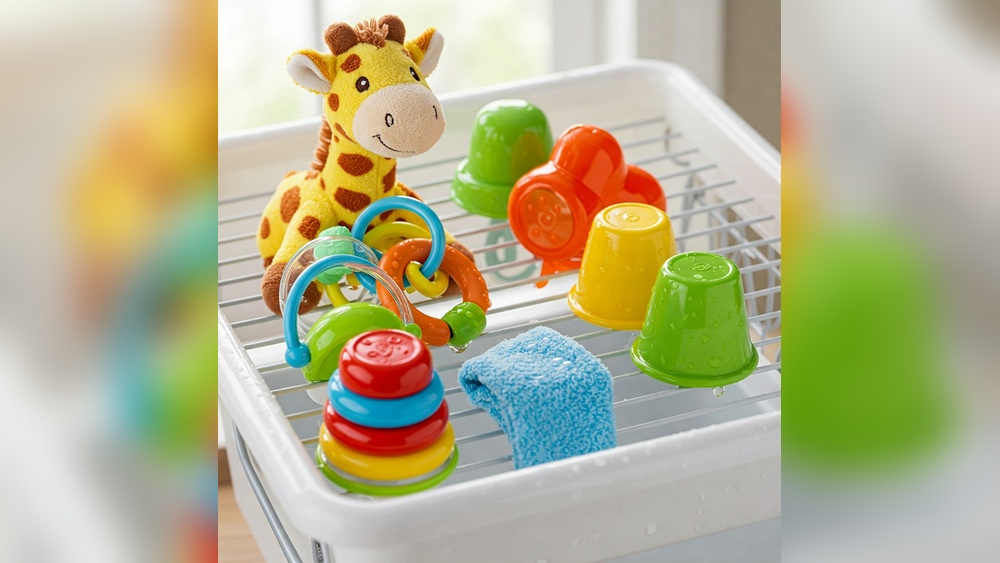
Air drying is the best way to dry baby toys. Place toys on a clean towel in a dry area. Avoid using cloths that can leave lint on toys. Make sure toys are fully dry before storing. Moisture can cause mold and bacteria. For small toys, use a drying rack or mesh bag. Sunlight can help dry toys and kill germs, but avoid long exposure to prevent damage.
Safe Toy Storage Tips
Store baby toys in a clean, dry container. Use bins or boxes with lids to keep dust away. Avoid storing toys in damp places like basements. Separate clean toys from dirty ones to avoid contamination. Check toys regularly and clean before storing again. Label storage containers for easy identification. Keep storage areas out of reach of pets and pests.
How Often To Clean Baby Toys
Cleaning baby toys that go in the mouth is important for your child’s health. Germs and dirt can build up quickly on these toys. Regular cleaning helps keep your baby safe from bacteria and viruses. Knowing how often to clean these toys makes it easier to maintain good hygiene. Follow these simple tips to keep your baby’s toys clean and fresh.
Daily Cleaning Tips
Wipe toys with a damp cloth or baby-safe wipe each day. This removes saliva, dirt, and germs. Focus on toys your baby uses most often. Use warm water and mild soap for quick cleaning. Rinse well to avoid soap residue. Let toys air dry completely before giving them back to your baby. This daily routine reduces the risk of infections.
Deep Cleaning Schedule
Deep clean baby toys once a week or after illness. Use warm water and mild soap or a baby-safe disinfectant. For plastic toys, you can boil or use a dishwasher if safe. Soft toys need gentle washing, either by hand or in a washing machine. Dry toys thoroughly to prevent mold growth. A deep clean removes hidden germs and keeps toys hygienic.
Avoiding Harmful Chemicals
Cleaning baby toys that go in the mouth requires care. Avoiding harmful chemicals protects your baby’s health. Babies often chew on toys, so safe cleaning matters. Harsh chemicals can cause allergies or worse problems. Use gentle, safe methods to clean these toys.
Toxic Ingredients To Watch For
Some cleaning products contain harmful chemicals. Avoid bleach, ammonia, and strong detergents. These can irritate a baby’s skin or mouth. Phthalates and parabens may also harm health. Look for labels that say “non-toxic” or “baby safe.” Avoid products with strong scents or dyes. These often hide harmful ingredients. Always read the list of ingredients carefully.
Natural Alternatives
Natural products clean toys safely. White vinegar and water work well to kill germs. Baking soda removes stains and odors gently. Mild soap with warm water is good for plastic toys. Steam cleaning is a chemical-free option. Use clean cloths or brushes for scrubbing. Let toys dry completely before giving them back. Natural methods keep toys clean without risks.

Credit: moonkieshop.com
Frequently Asked Questions
How Often Should I Clean Baby Toys That Go In Mouth?
Clean baby toys at least once a week to remove germs. Wash immediately if dropped on the floor or visibly dirty. Frequent cleaning prevents infections and keeps toys safe for babies to chew.
What Is The Safest Cleaning Method For Baby Mouth Toys?
Use warm water and mild soap to clean baby mouth toys. Avoid harsh chemicals or bleach that can harm your baby. Rinse thoroughly and air dry before giving the toy back to your child.
Can I Use A Dishwasher To Clean Baby Mouth Toys?
Yes, many plastic baby toys are dishwasher safe. Place them on the top rack and use a gentle cycle. Always check the toy’s label to confirm dishwasher compatibility to avoid damage.
How Do I Disinfect Baby Toys Without Harmful Chemicals?
Disinfect toys by soaking them in a vinegar and water solution for 10 minutes. Vinegar is natural and kills most bacteria safely. Rinse well with water and air dry before use.
Conclusion
Cleaning baby toys that go in the mouth keeps your child safe and healthy. Use gentle soap and warm water for best results. Rinse toys well to remove all soap. Dry toys completely before giving them back. Clean toys often to stop germs from spreading.
Simple steps make a big difference in your baby’s health. Keep toys clean, and your baby will enjoy safe playtime every day. Remember, regular cleaning protects your little one from harmful bacteria and viruses.
